Thursday, July 14, 2011

Once, Then, and Now

My good friend Ms. G agreed to blog about what sounds like a fascinating trilogy by author Morris Gleitzman.  In fact, she read the last two books in one day!  That's a sure sign of a gripping story.  Here is some background information about the books followed by Ms. G's review:


Author's description: "Now is the third book about Felix.  In Once and Then, Felix is a ten-year-old boy struggling to survive in Nazi-occupied Poland in 1942.  He and his dearest friend, six-year-old Zelda, are caught up in that terrible time we call the Holocaust." 


The front and back covers of Once read:

"Everybody
deserves
to have
something good in their life.

At least
Once."

"Once I escaped from an 
orphanage to find Mum and Dad.

Once I saved a girl called 
Zelda from a burning house.

Once I made a Nazi
with a toothache laugh."

The cover of Then reads:
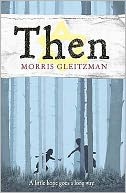
"I had a plan for me and Zelda:
Pretend to be someone else.
Find new parents.
Be safe forever.

Then the Nazis came."


The cover of Now reads:

"Once I didn't know about my grandfather Felix's scary childhood.
Then I found out what the Nazi's did to his best friend Zelda.
Now I understand why Felix does the things he does.

At least he's got me.
My name is Zelda too.
This is our story."


Here is what Ms. G had to say:

My mother introduced me to Once this winter - after finishing it in one sitting, I pre-ordered Then.  Last week my aunt who was visiting from Australia, brought Now.  I was sitting on my porch finishing the final pages of Then, when company returned from outings and I refused to talk to anyone as I read the final pages with tears streaming down my face.  After dinner, I stayed up until 3:30 with Now.  It is fair to say that all Holocaust stories are disturbing, so fair warning that Once and especially Then tell of those horrors, but there are laugh-out-loud moments too.  

Now is different.  It is set in modern day Australia, outside of the city of Melbourne.  While Felix narrates Once and Then, his granddaughter, Zelda, tells their story in Now.  I found all three books engaging throughout, but if you only have time for one, Then   is the best - the most heart wrenching, but the best none the less.

Wednesday, July 6, 2011

Listen to The Graveyard Book for free!

I'm smack dab in the middle of Sarah Dessen's That Summer right now, so won't be posting a new review today.  However, I did want to share the fact that you can watch Neil Gaiman read his award-winning The Graveyard Book in its entirety (and for free!) by visiting  http://www.mousecircus.com/videotour.aspx.  You won't be sorry!

Tuesday, July 5, 2011

Granny Torrelli Makes Soup


I have to make it quick today because Mr. K would really like to get to Home Depot to pick out the perfect stones for our soon-to-be patio.  So without further ado, here is the publisher’s description of Granny Torrelli Makes Soup by Sharon Creech:

"Bailey, who is usually so nice, Bailey, my neighbor, my friend, my buddy, my pal for my whole life, knowing me better than anybody, that Bailey, that Bailey I am so mad at right now, that Bailey, I hate him today.

Twelve-year-old Rosie and her best friend, Bailey, don't always get along, that's true. But Granny Torrelli seems to know just how to make things right again with her interesting stories and family recipes. It's easier to remember what's important about love, life, and friendship while Granny Torrelli makes soup." (Harper Collins Publishers)

I thought this book was excellent!  It is divided into two parts: Soup and Pasta.  Throughout each section, Rosie, the kind but fiery narrator and protagonist, sits in the kitchen with Granny Torrelli and tells her about new problems with her long-time friend Bailey.  Granny does what most adults (including myself) sometimes have a hard time doing: she just listens.  When she’s not listening, she’s telling Rosie a relatable story about her own childhood, resulting in an amused and/or shocked Rosie and reader.  Of course, Granny’s stories, like her soup, are deep with meaning and flavor, and affect the way Rosie thinks about her friendship with Bailey.

My favorite part of this book is the way Sharon Creech created distinct and authentic voices for her characters.  They seemed like real people whose homes I would want to be invited to for dinner again and again.  Rosie is smart and a little cocky, with a temper that gets her into a decent amount of trouble.  This is something to which I can relate!  Granny is funny, deceptively sharp, and always beaming with warmth.  I wish she were a part of my family and you will too if you give this book a try!   

Monday, July 4, 2011

Philippa Fisher's Fairy Godsister


Summary from Booklist: “Philippa is lonely when her best friend Charlotte moves to the country. Picking a daisy, she sings a magical charm, thereby animating her very own fairy godsister—complete with three wishes. Unfortunately, the argumentative Daisy is not particularly fond of humans and her wishes turn out very badly: Philippa’s parents become more “normal” but they fight all the time, and Philippa’s new-found popularity doesn’t make her especially happy.”

I enjoyed reading the tale of Philippa Fisher and her Fairy Godsister by Liz Kessler. It was a nice.  It was pleasant. The problem is, I want my stories to be more than nice and pleasant. I want them to reach out and touch my heart, maybe even rip my guts out, and this book didn't do that. I believe there were two things that got in the way for me as I read this book:

1. The protagonist was absurdly naïve.  Philippa, good-hearted as she might be, really never sees anything coming…EVER.  This quality became annoying for me because, instead of experiencing the story as if I was standing beside Phillipa,  I felt like I was standing way ahead of her waving my arms and shouting, “Dude, this way!  Come on, already!” Which leads me to my next point…

2. The story events were far too predictable.  Middle-grade readers can be quite savvy and might feel insulted by the overwhelming amount of foreshadowing provided throughout the plot.

However, Philippa’s story was still a lot of fun in spite of these issues.  In it you will find fairies, tree houses, talking rainbows, luminescent wish vouchers, and an important message about the importance of being yourself.  Give it a shot and let me know what you think!
  

Sunday, July 3, 2011

IT'S SUMMER!


It's that time of year...the time you think will NEVER, EVER come...it's...wait for it...SUMMER VACATION! Along with swimming, staying up way too late, and sleeping in way too late, it's also a wonderful time to read, read, read. Yeah, I said it. But before anyone starts freaking out, just remember that the books you read over the summer should be fun and exciting. Your summer reading books, aside from the ones you might have no choice but to read because of a school assignment, shouldn't feel like work. I, Mrs. K, grant you permission to read for enjoyment. Choose books that make you forget you're even reading. After 30 pages, if a book hasn't hooked you, put it down and try something new. Abandoning a book that isn't working for you is your right as a reader! Now, before anyone starts using this as an excuse to refuse to read beyond page 30 when your class is assigned Romeo and Juliet or To Kill a Mockingbird, think again. Teachers use these texts because they are GREAT, culturally relevant, and will exercise your critical reading muscles. Trust me folks, you want to be literate members of society. Literacy means opportunity, happiness, and intellectual freedom!

But back to the whole idea of fun. It's summer, keep reading, but make sure you feel good while you're doing it. If you're not sure where to start, come visit my blog. Throughout July and August I will update Mrs. K's Bookshelf like crazy because it is my responsibility as a teacher of literacy to stay current with what is happening in the fields of children's and adolescent literature...not to mention I will have a blast doing it! Check it out weekly for news and reviews of books written for you. Happy reading!

Thursday, February 24, 2011

Bronx Masquerade by Nikki Grimes


“When I was seven,
I looked to heaven
and dreamed
of going to the moon
but pretty soon
somebody came along
to change
my tune.
They put me down.
Bang! There my dream lay
on the ground.
Thank God, eventually
I came around
and dreamed
another dream.”


Bronx Masquerade, by Nikki Grimes, tells the story of Mr. Ward’s high school English class and the “Open Mike Fridays” that he provides so his students have a place to read their original poems and listen to those of their classmates. There is Wesley “Bad Boy” Boone, the one who started it all by refusing to write an essay on Langston Hughes and instead hands in a poem entitled ‘Long Live Langston’. He rationalizes his behavior, stating, “what’s the point of studying poetry and then writing essays? (4)” Fair enough. Mr. Ward allows Wesley to read his outstanding poem to the class but, being a teacher of integrity, expects him to hand in the essay the following week. Wesley’s reading lights a fire in several of the students and before you know it they all want a chance to read. Their poems break through superficial exteriors, reveal who they really are, and help them to make connections that allow them to express their feelings, heal wounds, and imagine futures and dreams they never thought possible.

Bronx Masquerade is told from multiple points of view. The reader gets a chance to discover the thoughts of each student in Mr. Ward’s class through brief first-person narratives followed by poems they wrote and plan to read on Open Mike Fridays. Between each narrative and poem, we hear from Tyrone Bittings, the young man who goes from refusing to believe in a future for himself to being the student who is most confident about his ability to write, rap, and “flow” at the poetry readings. Tyrone’s regular commentary serves to stabilize the story and connect each narrator, making Bronx Masquerade a cohesive tale rather than a collection of vignettes and poetry. In the end he speaks for all of the characters when he says, “I just wanted to say I’m really glad I got to do this poetry thing because I feel like, even though the people in our class are all different colors and some of you speak a different language and everything, I feel like we connected. I feel like I know you now. You know what I’m saying? I feel like we’re not as different as I thought. (164)”

Grimes created believable characters and put forth a hopeful message for all readers who need to hear that no matter where they come from or what their experience has been, they can not only have dreams, but can take steps right now to reach them. Also, Grimes beautifully illustrates that we don’t really know anyone until we have listened to what is in their hearts. This is an excellent book to use for teaching point of view, voice, and, of course, poetry. This book will help students understand the true power of poetry and might, like the review in Publishers Weekly states, “inspire readers to try a few [poems] of their own.”

Behind You by Jacquline Woodson


“When you die, your voice becomes the wind and whispers to the living-
Ellie. You’re loved.
Carlton. You’re loved.
Mama. You’re loved.
Pops. You’re loved.
And Kennedy-hey, Kennedy-you got game, yo!
And when each of the people you left behind has heard, you turn slowly and begin your long walk into your new world.
But some every now and then you stop, look behind you.
And remember.”


Behind You is a story that describes the emotional aftermath of a young black teenager’s untimely death. While running home from his girlfriend Ellie’s house, Miah is shot in Central Park by a police officer who mistook him for a criminal on the run. What follows is a beautifully rendered narrative tracing the hurt, healing, and eventual surrender of each person affected by his death, including Miah from the other side of life. Each chapter is brief and is told from the perspectives of different characters in the book: Miah, Ellie (the love of Miah’s life), Nelia (Miah’s mother), Kennedy (Miah’s basketball teammate), Carlton (Miah’s oldest friend), Norman (Miah’s father), and Desire Viola (Miah’s grandmother who meets him on the other side). Each character describes their pain and the steps they take, willing or not, to accept and move on from Miah’s death. Miah himself struggles to let go of the world he left and look forward to his new world. Throughout the narrative, Woodson explores the questions of how long it should take to grieve a loss, and what it is that people need to experience most of all while here on Earth.

What struck me as most powerful about Woodson’s narrative was her ability to create such authentic voices for each of her narrators. I believed what each character was telling me and never felt as if their voices were forced or contrived, as I have experienced with other young adult authors. For example, Miah’s mother Nelia, a successful writer, convinces me of her pain and shock over the loss of her only child when she says, “And my hands. I am not old, but my hands shake sometimes. I cannot find a pen that writes. I cannot find paper to write on. I cannot. I cannot. I cannot. So I sleep. In this big house with all of its quiet, what else is there to do?” (13). Nelia does not even mention Miah here, and yet we sense her devastation and her lost ability to face her feelings and the world, and so instead of writing and living, she sleeps.

 Another character whose voice captivated me during my reading of Behind You is Kennedy, Miah’s teammate on the Percy Academy basketball team. As he contemplates a recently lost game he says, “on some days, I feel my boy right here, right next to me. He’s sitting on my bed…And he’s got this big grin on his face. I even feel his hand – slapping mine, saying, You know we shoulda whipped Dalton, yo. And I take his hand, pull him to me real quick, slap his back. Say, Who you tellin’, Miah man? Who you tellin’? (16-17)” Here, Kennedy illustrates a longing for his teammate and a strong feeling that Miah is still close by. Kennedy, a proud young man, doesn’t exude emotion in a dramatic way here, even though he is alone in his room, safe from the judgmental eyes of others. His expression is more subtle and, therefore, that much more powerful. I found this to be a realistic portrayal of a teenage boy’s grief process.

Woodson paints a believable picture of human beings in reaction to the most devastating kind of loss: the loss of one’s teammate, best friend, soul mate, and, above all, the loss of one’s child. Throughout each chapter, she refuses to hit the reader over the head with a lot of predictable drama and emotionality. In doing so, she shows great respect for her readers…And if there is one thing teenagers value most, it’s receiving respect from adults.